Industrial & Commercial Robotic Sweepers
Smarter sweeping for cleaner commercial spaces.
Keep large commercial and industrial floors cleaner with intelligent robotic sweepers designed to collect dust, litter and loose debris autonomously. Smart route planning and remote management help deliver reliable cleaning across warehouses, logistics centres, shopping centres and other busy environments.
Industrial & Commercial Robotic Sweepers
Smarter sweeping for cleaner commercial spaces.
Keep large commercial and industrial floors cleaner with intelligent robotic sweepers designed to collect dust, litter and loose debris autonomously. Smart route planning and remote management help deliver reliable cleaning across warehouses, logistics centres, shopping centres and other busy environments.
What an Industrial Robotic Sweeper Does
An industrial robotic sweeper — sometimes called an industrial robot hoover — collects dust, litter and loose debris from large floor areas without an operator walking behind it. It maps the site once, then runs the same routes on a schedule, reporting what it covered and flagging anything it could not.
It does not replace a cleaning team. It takes the repetitive open-floor work off them, so the hours you are already paying for go into detail cleaning, washrooms and the areas a machine cannot reach.
Dust & Debris Collection
Collects dust, dirt, packaging fragments and loose litter across hard floors, with AI recognition directing extra passes where debris is heaviest.
Wide-Area Coverage
Built for repeatable routes across warehouse aisles, production floors and open concourses, rather than small or heavily obstructed rooms.
Scheduled Cleaning
Runs overnight or between shifts, so floors are clean before the site opens without paying an out-of-hours rate.
Remote Monitoring
Shows coverage, schedules and machine status from an app, giving you a record of what was cleaned and when — useful for audits and for contract cleaning oversight.
What an Industrial Robotic Sweeper Does
An industrial robotic sweeper — sometimes called an industrial robot hoover — collects dust, litter and loose debris from large floor areas without an operator walking behind it. It maps the site once, then runs the same routes on a schedule, reporting what it covered and flagging anything it could not.
It does not replace a cleaning team. It takes the repetitive open-floor work off them, so the hours you are already paying for go into detail cleaning, washrooms and the areas a machine cannot reach.
Dust & Debris Collection
Collects dust, dirt, packaging fragments and loose litter across hard floors, with AI recognition directing extra passes where debris is heaviest.
Wide-Area Coverage
Built for repeatable routes across warehouse aisles, production floors and open concourses, rather than small or heavily obstructed rooms.
Scheduled Cleaning
Runs overnight or between shifts, so floors are clean before the site opens without paying an out-of-hours rate.
Remote Monitoring
Shows coverage, schedules and machine status from an app, giving you a record of what was cleaned and when — useful for audits and for contract cleaning oversight.
Autonomous commercial sweeping
Explore Our Robotic Sweeper Range
Compare intelligent PUDU robotic sweepers designed to collect dust, litter and loose debris autonomously across warehouses, logistics sites, industrial facilities and other busy commercial environments.
AI-powered robotic sweeper
PUDU MT1
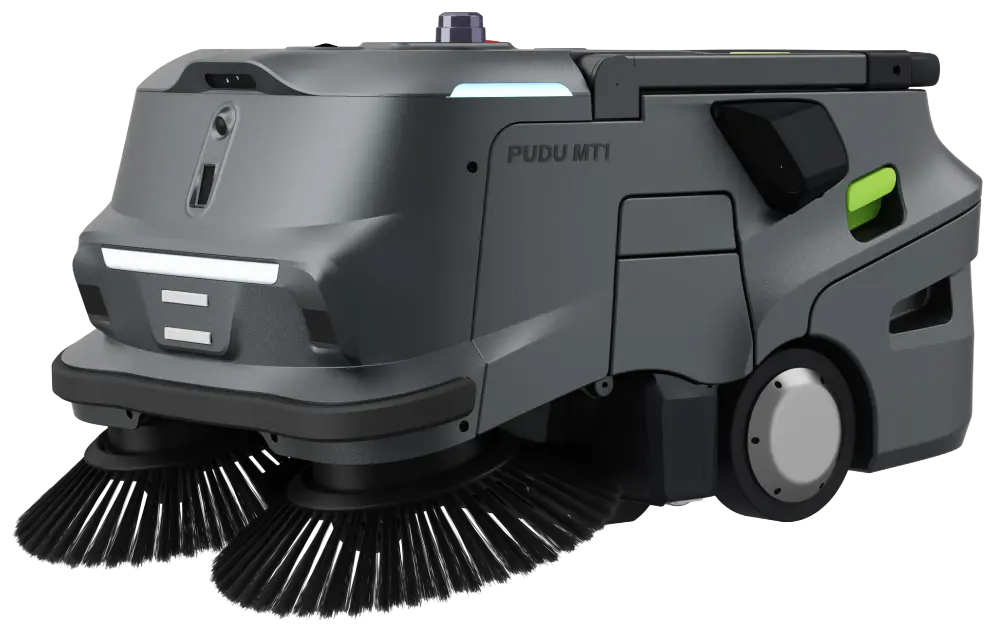
A compact autonomous sweeper designed to maintain busy commercial floors by detecting and collecting dust, litter and loose debris across repeatable cleaning routes.
- AI trash recognition with targeted spot cleaning
- 70 cm sweeping width with a 35-litre debris bin
- Up to 8 hours’ runtime with automatic docking
High-capacity robotic sweeper
PUDU MT1 Max
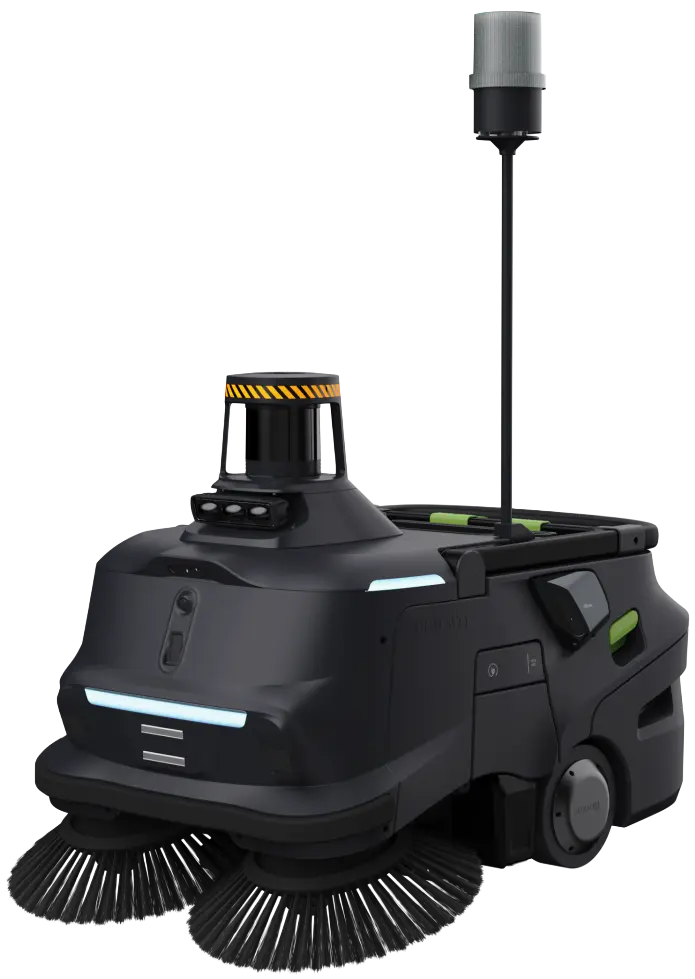
A larger autonomous sweeper built for extensive floor areas and demanding cleaning workloads across warehouses, transport hubs and industrial environments.
- 3D LiDAR navigation with multi-sensor obstacle detection
- AI adaptive cleaning adjusts power to suit debris levels
- Cleans up to 2,200 m² per hour in coverage mode
Outdoor robotic sweeper
PUDU BG1
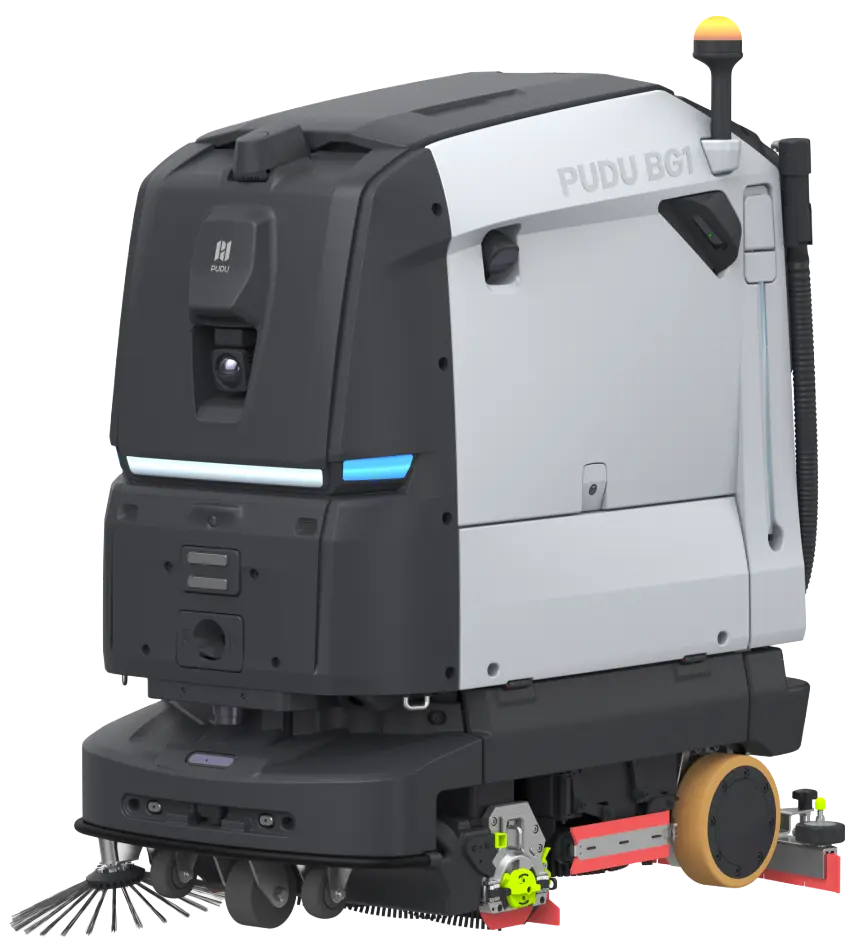
An autonomous sweeper-scrubber that sweeps, washes and recovers dirty water in a single pass, removing the need to run a separate sweeper and scrubber-dryer across large commercial and industrial floors.
- 75-litre clean water and 60-litre recovery tanks
- Automatic dual-agent dosing with extendable edge scrubbing
- Cleans up to 2,000 m² per hour, with dust mopping and polishing available

Autonomous commercial sweeping
Explore Our Robotic Sweeper Range
Compare intelligent PUDU robotic sweepers designed to collect dust, litter and loose debris autonomously across warehouses, logistics sites, industrial facilities and other busy commercial environments.
AI-powered robotic sweeper
PUDU MT1
A compact autonomous sweeper designed to maintain busy commercial floors by detecting and collecting dust, litter and loose debris across repeatable cleaning routes.
- AI trash recognition with targeted spot cleaning
- 70 cm sweeping width with a 35-litre debris bin
- Up to 8 hours’ runtime with automatic docking
High-capacity robotic sweeper
PUDU MT1 Max
A larger autonomous sweeper built for extensive floor areas and demanding cleaning workloads across warehouses, transport hubs and industrial environments.
- 3D LiDAR navigation with multi-sensor obstacle detection
- AI adaptive cleaning adjusts power to suit debris levels
- Cleans up to 2,200 m² per hour in coverage mode
Outdoor robotic sweeper
PUDU BG1
An autonomous sweeper-scrubber that sweeps, washes and recovers dirty water in a single pass, removing the need to run a separate sweeper and scrubber-dryer across large commercial and industrial floors.
- 75-litre clean water and 60-litre recovery tanks
- Automatic dual-agent dosing with extendable edge scrubbing
- Cleans up to 2,000 m² per hour, with dust mopping and polishing available
PUDU MT1 vs MT1 Max vs BG1
Three machines. Two kinds of clean. One clear choice.
Start with one question: do your floors need washing, or only sweeping?
The MT1 and MT1 Max are dry sweepers. They collect dust, litter and loose debris into a 35-litre bin.
The BG1 is a sweeper-scrubber. It sweeps, washes and recovers dirty water in a single pass, removing the need to run a separate sweeper and scrubber-dryer.
If dry sweeping is all you need, the MT1 and MT1 Max both map areas up to 100,000 m². The main differences are speed, endurance and the environments they are designed to work in.
| Specification | PUDU MT1 Dry sweeper | PUDU MT1 Max Dry sweeper | PUDU BG1 Sweeper-scrubber |
|---|---|---|---|
| What it does | |||
| 01 Cleaning method | AI-powered dry sweeping | Dry sweeping | Sweeping, scrubbing and water recovery in one pass |
| 02 Recommended use | Commercial and industrial dry floor sweeping | Commercial, industrial and semi-outdoor sweeping | Large-scale commercial and industrial floor cleaning |
| 03 Key additional features | AI trash recognition and targeted spot cleaning | AI adaptive cleaning, automatic filter cleaning and enhanced vehicle avoidance | Optional dust mopping and polishing |
| Size & access | |||
| 04 Dimensions | 840 × 600 × 490 mm | 840 × 600 × 675 mm | 1195 × 760 × 1303 mm with squeegee |
| 05 Weight | 65 kg | 85 kg | Approx. 344 kg |
| 06 Minimum path clearance | 75 cm | Not published | 85 cm |
| 07 Cleaning width | 70 cm | 70 cm with side brush | 550 mm, or 708 mm with side brushes |
| Capacity | |||
| 08 Waste bin | 35 L | 35 L | 5 L |
| 09 Clean water tank | — | — | 75 L |
| 10 Wastewater tank | — | — | 60 L |
| 11 Detergent dosing | — | — | Automatic dual-agent, approx. 7 L total |
| Performance | |||
| 12 Coverage cleaning | Max. 1,800 m²/h | Max. 2,200 m²/h | Max. 2,000 m²/h |
| 13 Spot cleaning | Max. 6,000 m²/h | Max. 7,000 m²/h | Max. 6,000 m²/h |
| 14 Cruise speed | 0.2–1.2 m/s, adjustable | 0.2–1.2 m/s, adjustable | 0.2–1.0 m/s |
| 15 Maximum mapped area | Up to 100,000 m² | Up to 100,000 m² | Not published |
| Power & runtime | |||
| 16 Operating runtime | 4–8 hours | 5–10 hours | Max. 7.5 hours |
| 17 Charging time | Under 3 hours | Under 3.5 hours | Approx. 3 hours high voltage, 4.5 hours low voltage |
| 18 Battery | Not published | 60 Ah | 90 Ah, 48 V platform |
| 19 Continuous operation | 24/7 with automated docking | 24/7 with automated docking | Optional workstation for refill, drainage and charging |
| Navigation & safety | |||
| 20 Navigation | VSLAM + Marker + LiDAR SLAM | 3D LiDAR with multi-sensor fusion | LiDAR with 3D VSLAM fusion |
| 21 Edge cleaning | Zero-gap edge cleaning | Zero-gap edge cleaning | Extendable edge scrubbing |
| 22 Dust & water protection | Not published | IP54 | Not published |
| 23 Site safety alerts | Not fitted | 1.2 m warning light and safety projection lighting | Audio-visual alerts |
| 24 Dust control | High-flow negative pressure ventilation with filtration | Automatic filter cleaning | — |
| 25 Connectivity | IoT and PUDU Link | IoT and PUDU Link | Optional IoT and PUDU Link |
Which should you choose? If your floors only need dry sweeping, compare the MT1 and MT1 Max. If they need washing as well, the BG1 sweeps, scrubs and recovers dirty water in one pass. Purozo can assess your floor type, access, traffic and cleaning requirements before recommending a machine.
Book a ConsultationPUDU MT1 vs MT1 Max vs BG1
Three machines. Two kinds of clean. One clear choice.
Start with one question: do your floors need washing, or only sweeping?
The MT1 and MT1 Max are dry sweepers. They collect dust, litter and loose debris into a 35-litre bin.
The BG1 is a sweeper-scrubber. It sweeps, washes and recovers dirty water in a single pass, removing the need to run a separate sweeper and scrubber-dryer.
If dry sweeping is all you need, the MT1 and MT1 Max both map areas up to 100,000 m². The main differences are speed, endurance and the environments they are designed to work in.
| Specification | PUDU MT1 Dry sweeper | PUDU MT1 Max Dry sweeper | PUDU BG1 Sweeper-scrubber |
|---|---|---|---|
| What it does | |||
| 01 Cleaning method | AI-powered dry sweeping | Dry sweeping | Sweeping, scrubbing and water recovery in one pass |
| 02 Recommended use | Commercial and industrial dry floor sweeping | Commercial, industrial and semi-outdoor sweeping | Large-scale commercial and industrial floor cleaning |
| 03 Key additional features | AI trash recognition and targeted spot cleaning | AI adaptive cleaning, automatic filter cleaning and enhanced vehicle avoidance | Optional dust mopping and polishing |
| Size & access | |||
| 04 Dimensions | 840 × 600 × 490 mm | 840 × 600 × 675 mm | 1195 × 760 × 1303 mm with squeegee |
| 05 Weight | 65 kg | 85 kg | Approx. 344 kg |
| 06 Minimum path clearance | 75 cm | Not published | 85 cm |
| 07 Cleaning width | 70 cm | 70 cm with side brush | 550 mm, or 708 mm with side brushes |
| Capacity | |||
| 08 Waste bin | 35 L | 35 L | 5 L |
| 09 Clean water tank | — | — | 75 L |
| 10 Wastewater tank | — | — | 60 L |
| 11 Detergent dosing | — | — | Automatic dual-agent, approx. 7 L total |
| Performance | |||
| 12 Coverage cleaning | Max. 1,800 m²/h | Max. 2,200 m²/h | Max. 2,000 m²/h |
| 13 Spot cleaning | Max. 6,000 m²/h | Max. 7,000 m²/h | Max. 6,000 m²/h |
| 14 Cruise speed | 0.2–1.2 m/s, adjustable | 0.2–1.2 m/s, adjustable | 0.2–1.0 m/s |
| 15 Maximum mapped area | Up to 100,000 m² | Up to 100,000 m² | Not published |
| Power & runtime | |||
| 16 Operating runtime | 4–8 hours | 5–10 hours | Max. 7.5 hours |
| 17 Charging time | Under 3 hours | Under 3.5 hours | Approx. 3 hours high voltage, 4.5 hours low voltage |
| 18 Battery | Not published | 60 Ah | 90 Ah, 48 V platform |
| 19 Continuous operation | 24/7 with automated docking | 24/7 with automated docking | Optional workstation for refill, drainage and charging |
| Navigation & safety | |||
| 20 Navigation | VSLAM + Marker + LiDAR SLAM | 3D LiDAR with multi-sensor fusion | LiDAR with 3D VSLAM fusion |
| 21 Edge cleaning | Zero-gap edge cleaning | Zero-gap edge cleaning | Extendable edge scrubbing |
| 22 Dust & water protection | Not published | IP54 | Not published |
| 23 Site safety alerts | Not fitted | 1.2 m warning light and safety projection lighting | Audio-visual alerts |
| 24 Dust control | High-flow negative pressure ventilation with filtration | Automatic filter cleaning | — |
| 25 Connectivity | IoT and PUDU Link | IoT and PUDU Link | Optional IoT and PUDU Link |
Which should you choose? If your floors only need dry sweeping, compare the MT1 and MT1 Max. If they need washing as well, the BG1 sweeps, scrubs and recovers dirty water in one pass. Purozo can assess your floor type, access, traffic and cleaning requirements before recommending a machine.
Book a ConsultationCost Calculator
What is manual sweeping costing you?
See how much time routine sweeping takes across your site. Adjust the sliders to match your operation and get a clearer picture of the hours involved over a year.
Your Site Operations
Total across all staff and shifts for the area you'd want covered.
Wage plus employer NI, pension, holiday cover and supervision.
Weeks per year the site is cleaned.
How this is worked out
Hours per week × your labour rate × operating weeks. Nothing else is added or assumed: every figure shown comes from the three numbers you set above.
Your current manual sweeping cost
£27,000
per year, on the figures you entered
- Hours per year
- 1,500 hrs
- Cost per week
- £540
- Cost per month
- £2,250
- Over five years
- £135,000
This is your current cost, not a saving. A robotic sweeper takes on routine floor coverage, but some manual work always remains: edges, detail cleaning, emptying and supervision. The machine also has its own purchase and service costs, which are not included above. How much of this cost you release depends on your site and shift patterns.
Illustrative only. Based entirely on the figures you entered and intended as a starting point for discussion, not a quotation.
Talk it through with our team →Cost Calculator
What is manual sweeping costing you?
See how much time routine sweeping takes across your site. Adjust the sliders to match your operation and get a clearer picture of the hours involved over a year.
Your Site Operations
Total across all staff and shifts for the area you'd want covered.
Wage plus employer NI, pension, holiday cover and supervision.
Weeks per year the site is cleaned.
How this is worked out
Hours per week × your labour rate × operating weeks. Nothing else is added or assumed: every figure shown comes from the three numbers you set above.
Your current manual sweeping cost
£27,000
per year, on the figures you entered
- Hours per year
- 1,500 hrs
- Cost per week
- £540
- Cost per month
- £2,250
- Over five years
- £135,000
This is your current cost, not a saving. A robotic sweeper takes on routine floor coverage, but some manual work always remains: edges, detail cleaning, emptying and supervision. The machine also has its own purchase and service costs, which are not included above. How much of this cost you release depends on your site and shift patterns.
Illustrative only. Based entirely on the figures you entered and intended as a starting point for discussion, not a quotation.
Talk it through with our team →Why choose Purozo for robotic sweepers?
On-Site Demonstration
We run the machine on your own floor, with your own debris, before you commit.
Book a Demo →Site Assessments
We carry out a site assessment to review your floor area, surface type and operational requirements before recommending the most suitable robotic cleaning solution.
Book a Site Assessment →Training & Servicing
Operator training included. Servicing, consumables and remapping from our team of engineers.
Speak to our Team →Honest Advice
Autonomous sweeping does not suit every floor. If yours is wrong for it, we will say so.
Explore the Range →Why choose Purozo for robotic sweepers?
On-Site Demonstration
We run the machine on your own floor, with your own debris, before you commit.
Book a Demo →Site Assessments
We carry out a site assessment to review your floor area, surface type and operational requirements before recommending the most suitable robotic cleaning solution.
Book a Site Assessment →Training & Servicing
Operator training included. Servicing, consumables and remapping from our team of engineers.
Speak to our Team →Honest Advice
Autonomous sweeping does not suit every floor. If yours is wrong for it, we will say so.
Explore the Range →Need help choosing a robotic sweeper?
Our team can help you compare models and find the right autonomous cleaning solution for your facility.
Frequently Asked Questions
What is a robotic sweeper? ⌄
A robotic sweeper is an autonomous cleaning machine designed to collect dust, litter and loose debris from commercial floors. It uses mapping, navigation and safety sensors to follow planned cleaning routes with minimal operator involvement.
Where can robotic sweepers be used? ⌄
Robotic sweepers are suitable for warehouses, logistics centres, factories, shopping centres, transport hubs, car parks and other large commercial or industrial spaces. The most appropriate model will depend on the floor surface, layout and type of debris being collected.
How does a robotic sweeper navigate around a building? ⌄
Robotic sweepers use a combination of mapping technology, cameras, sensors and obstacle-detection systems to understand their surroundings. They can follow programmed routes, adjust around temporary obstacles and continue cleaning within approved areas.
Are robotic sweepers safe to use around people and equipment? ⌄
Robotic sweepers are designed with safety systems that help them detect people, vehicles, shelving and other obstacles. They can slow down, stop or change direction when something enters their cleaning path, although the site should still be assessed before deployment.
What types of debris can robotic sweepers collect? ⌄
Depending on the model, robotic sweepers can collect dust, dirt, leaves, packaging fragments, small pieces of litter and other loose floor debris. Larger or hazardous waste may still need to be removed manually before autonomous cleaning begins.
Need help choosing a robotic sweeper?
Our team can help you compare models and find the right autonomous cleaning solution for your facility.
Frequently Asked Questions
What is a robotic sweeper? ⌄
A robotic sweeper is an autonomous cleaning machine designed to collect dust, litter and loose debris from commercial floors. It uses mapping, navigation and safety sensors to follow planned cleaning routes with minimal operator involvement.
Where can robotic sweepers be used? ⌄
Robotic sweepers are suitable for warehouses, logistics centres, factories, shopping centres, transport hubs, car parks and other large commercial or industrial spaces. The most appropriate model will depend on the floor surface, layout and type of debris being collected.
How does a robotic sweeper navigate around a building? ⌄
Robotic sweepers use a combination of mapping technology, cameras, sensors and obstacle-detection systems to understand their surroundings. They can follow programmed routes, adjust around temporary obstacles and continue cleaning within approved areas.
Are robotic sweepers safe to use around people and equipment? ⌄
Robotic sweepers are designed with safety systems that help them detect people, vehicles, shelving and other obstacles. They can slow down, stop or change direction when something enters their cleaning path, although the site should still be assessed before deployment.
What types of debris can robotic sweepers collect? ⌄
Depending on the model, robotic sweepers can collect dust, dirt, leaves, packaging fragments, small pieces of litter and other loose floor debris. Larger or hazardous waste may still need to be removed manually before autonomous cleaning begins.
Monday to Friday
9:00am – 5:00pm
Please allow up to 5
working days for dispatch.
UK-wide delivery available.
Monday to Friday
9:00am – 5:00pm
Please allow up to 5
working days for dispatch.
UK-wide delivery available.